
FILE NO. 001-E-001A // PROVENANCE: IRELAND & THE DIASPORA // SOURCE: FOLKLORIC RECORD
Samhain Observances & Fairy Faith (Aos sí)
The Turn of the Year
In the agrarian world of traditional Ireland, autumn ended with the hard physical reality of winter. The season turned at Samhain, an Old Irish word meaning "summer’s end", at the close of October. Cattle were driven down from open pastures, rents came due, and families pulled back into thick stone cottages against the damp chill rolling in off the Atlantic (Danaher, 1972).
For the people living through it, this shift was more than seasonal. Standing between the old harvest year and the dark winter ahead, late October was understood as a thin and unsettled time (Hutton, 1996), an in-between season when veil between wore thin and thresholds such as doorways, mist, rainbows and dusk were thought to open onto the otherworld.
The Turnip Lantern and the Hearth
Survival through winter meant keeping a clear, respected boundary between the household and the wild dark outside. On Samhain night the domestic fire was traditionally put out, and the hearth that burned all year cleansed, then rekindled from blessed communal bonfires lit across the hilltops (Ó Súilleabháin, 1967).
Carrying that new flame back home along forest tracks and bog roads required a lantern. There were no pumpkins; people used purple-and-white and orange root crops of the October soil: swedes, mangel-wurzels, and field turnips.
Hollowing out a turnip was hard, stubborn work. The flesh is dense and fibrous, and it took kitchen knives and heavy spoons to carve a rough, hollow shell. Carved grimacing faces, glowing from a coal set inside, were understood to be talisman meant to frighten off wandering spirits or to recall Stingy Jack, the folk figure condemned to roam the dark earth with a burning coal in a hollow turnip (Rogers, 2002). Lit from the hilltop fire, the turnip served a double purpose: it guided the traveler home and was believed to keep the spirits at a distance.
A Note on European Turnip Traditions: The turnip lantern was not unique to the British Isles. Across Continental Europe, particularly in the Swiss German cantons, the Räbe (autumn fodder turnip) was a dietary staple before the potato. After the potato replaced it on the table, the turnip kept its ritual role: in many communities, Swiss children still hollow out these purple-and-white roots for the November Räbeliechtli processions, carrying candles through dark streets at the close of the final harvest.
The Transatlantic Crossing & The Mahoney Passage
These customs crossed the ocean during the Great Famine in the late 1840s and 1850s. Hundreds of thousands of Irish families boarded ships at ports such as Cobh (then Known as Cove) and Liverpool, bound for North America, carrying their dialect, their songs, and autumn customs in memory (Miller, 1985).
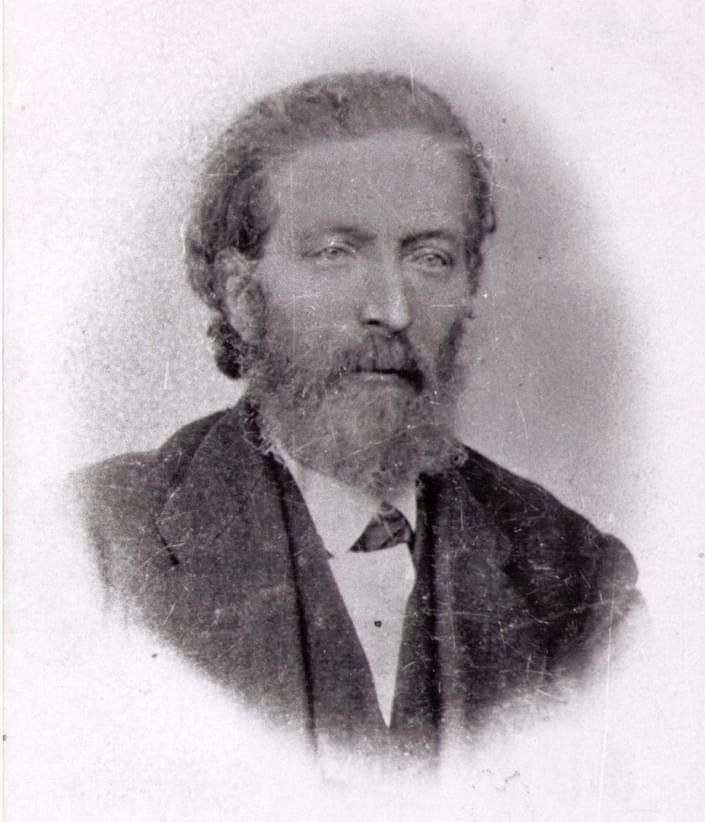
The crossing is documented in our own archives. Patrick Mahoney and Mary McCarthy were married in Clonakilty, County Cork in 1846. Family tradition holds that the match crossed lines of class and religion, between a poor Catholic laborer and a well-to-do Protestant woman. That account is unproven, but it is a reminder that these customs were carried not by "the Irish" in the abstract but by particular households under particular pressures. In July 1848, two years after their marriage, the couple arrived at the port of New York aboard the W.A. Cooper, sailing from Liverpool by way of Cobh. They joined the great transatlantic migration that carried Irish hearth customs to American shores.
Archival Cross-Reference: For the primary parish documentation and passenger manifest of their departure, inspect:
[File No. 001-B-001: Transnational Migrations Archives // Patrick Mahoney (1848)]
[File No. 001-D-001: Parish & Civil Archives // Patrick Mahoney & Mary McCarthy (1846)]
The American Pumpkin
In North America, emigrant families met an unfamiliar continent but found a native crop well suited to their old custom: Cucurbita pepo, the winter pumpkin.
Compared to the rock-hard European turnip, the pumpkin was a revelation. It was far larger and easy to scoop out, and its soft rind could be carved into elaborate faces in minutes. Set out on a porch, its glowing face was visible across streets and fields (Rogers, 2002). Historians generally trace the Jack-o’-lantern to this substitution, though the exact pathway of the custom remains debated.
Sources:
- Croker, T. Crofton. Fairy Legends and Traditions of the South of Ireland. London: John Murray, 1825.
- Danaher, Kevin. The Year in Ireland. Cork: Mercier Press, 1972.
- Evans, E. Estyn. Irish Folk Ways. London: Routledge & Kegan Paul, 1957.
- Gregory, Lady Augusta. Gods and Fighting Men. London: John Murray, 1904.
- Hutton, Ronald. The Stations of the Sun: A History of the Ritual Year in Britain. Oxford: Oxford University Press, 1996.
- Miller, Kerby A. Emigrants and Exiles: Ireland and the Irish Exodus to North America. New York: Oxford University Press, 1985.
- Ó Súilleabháin, Seán. Irish Folk Custom and Belief. Dublin: Cultural Relations Committee of Ireland, 1967.
- Rogers, Nicholas. Halloween: From Pagan Ritual to Party Night. Oxford: Oxford University Press, 2002.
Recommended Reading & Research Library
- The Mythological Foundations: Irish Myths and Legends, Vol. 1: Gods and Fighting Men (The Story of the Tuatha de Danaan and of the Fianna of Ireland) by Lady Augusta Gregory; Preface by W. B. Yeats (New Island Books). The foundational source text detailing how the Tuatha Dé Danann retreated into the earthen mounds to become the Aos Sí of Irish folklore. Buy Now
- The Heroic Cycles: Irish Myths and Legends, Vol. 2: Cuchulain and the Red Branch of Ulster by Lady Augusta Gregory; Preface by W. B. Yeats (New Island Books). Vital historical tales preserved from the oral tradition, exploring the sacred landscapes, heroic codes, and ancient tribal borders of early Ireland.
Buy Now
- Irish Fairy Tales and Folklore by W.B. Yeats (Clydesdale Press). A classic collection of Irish fairy tales and lore. Buy Now
- The Irish Calendar: The Year in Ireland by Kevin Danaher (Mercier Press). An essential guide to the seasonal customs, harvest superstitions, and traditional festivals of the Irish countryside. Buy Now
- Famine Emigration: Emigrants and Exiles: Ireland and the Irish Exodus to North America by Kerby A. Miller (Oxford University Press). The definitive historical account of the mid-19th-century Irish diaspora and the communities they built abroad. Buy Now
- History of the Holiday: Halloween: From Pagan Ritual to Party Night by Nicholas Rogers (Oxford University Press). A detailed, readable history tracing how European folk customs transformed into modern Halloween. Buy Now
As an Amazon Associate I earn from qualifying purchase.
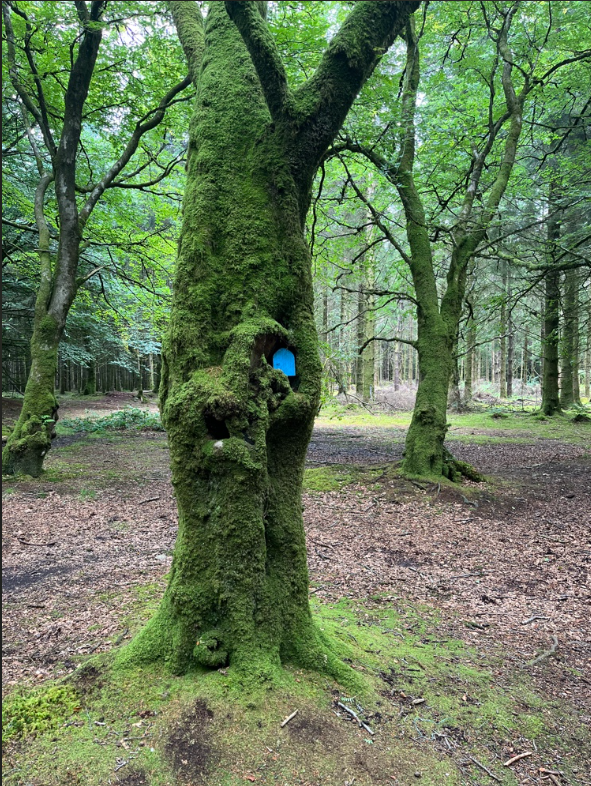
In Gaelic lore and tradition, that thinning veil was associated with the Aos Sí, the dwellers of the burial mounds, barrows, and ringforts scattered across the countryside (Ó Súilleabháin, 1967). In the mythological tradition recorded by Lady Augusta Gregory, these beings descend from the Tuatha Dé Danann, the people of the goddess Danu, who withdrew underground into the sídhe mounds after their defeat by the Milesians (Gregory, 1904). Folklorists have long read the fairy tradition as the survival of the older divine figures in humbler form: capricious, earth-bound guardians of the countryside.
This is not only dusty mythology. It lives and persists in the landscape and in everyday speech. Irish country lanes still bend around fairy thorns and circular earthen mounds that farmers avoid disturbing (Evans, 1957). Idioms, such as "away with the fairies" echo of the old belief that an absent-minded person had been carried off into the mounds (cf. Croker, 1825).